Research: overthoughts

20150721_135338

I am nearing the end of playing catch up with recording all my multifarious research activities.  So I need to reflect on better ways than this- writing up so much work, at the last minute!  I make raw notes all the time but they need refinement and distillation down to the main learning points.  This blog works well for this but needs to be kept up to date, and also needs to incorporate subject tags so that I can find and retrieve information.  This is a key learning point in itself.  If I had written a weekly update entry, all this would have been done already!!  My picture files are another very good aide-memoire, and I also need to spend time regularly organising and reflecting on these.  So, there is a patchiness to this account that has resulted from time pressure and failures of memory about things that happened some time ago.

As well as the activities described here, I have also had a good old wander around the college library, made full use of advice from my tutor and other college staff, attended Bianca’s reading group, and had a fantastic experience of peer-learning from crits and conversations with our talented and supportive MA group.

So it’s hard to record it all because there is so much- much more than I have been able to record- but it is there, I have learned so much.

Good habits are needed for the future.

Les Feministes detournent

20151205_183658

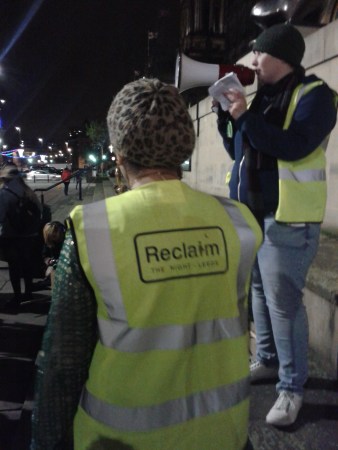
On Saturday evening I took a walk down memory lane when I marched around Leeds City Centre with a hundred or so women to ‘Reclaim the Night’.  A very powerful ‘detournement’ in terms of intervening in the crowded city, full of revellers and blown about by crazy winds.  I was unsure about whether to go- it was wild out there, and Strictly was on the telly.  But I am so glad I did.  Respect to the organisers, some of whom I am proud to know now, through the Leeds Feminist Network and Women Conversation:Leeds.  I am so encouraged by their work.  I think they are fabulous, and courageous.

There was the mixed response you’d expect- a few (harmless) drunks, some aggressive sexism (I don’t think they were drunk), and, best of all, some welcome support and interest from women, a group of lovely young women marched with us for a while.  The modest size of the demo didn’t stop us making quite an impact- we had rehearsed chanting and singing and developed a good line in whooping and cheering.

It felt very powerful and quite daring to do this.  Feminist activism is a scary thing these days.  The opposition to the ideas has become much more confident, and nasty, especially, but not exclusively, on social media.  It was very bold to be so visible, and audible, on a Saturday night down town just before Christmas.  Heartfelt thanks to the women (mostly young women) who are keeping the flame burning.

Notes for Research 2 hand-in

This entry is a lengthy account of the research I have done in the lead up to the current MA dissertation.  Here are notes from exhibitions and galleries I have visited, talks and courses, and projects I have been involved in.  As well as that, I have worked on several opportunities to show my work which is a form of action research, especially in terms of my site-specific process, based on being in a place, observing and letting the ideas come.

So it will be a useful distillation of key learning points for future reference, supporting the writing of my dissertation, and grounding my developing practice.  The long list below includes more recent research activity but several past blog entries serve a similar purpose, and should also be considered as part of my hand-in for Research Methods 2.

I take extensive ‘raw’ notes in a series of notebooks which will also be submitted with the blog.  There is a lot of detail there which backs up and augments the summary information here.  I also intend to go back through all of the blog entries, adding tags to help reading and retrieval of information.  This, together with an extensive picture library, is the core reference material supporting my practice, on an ongoing basis.  The website has provided an useful framework for this.

Nathalie Holbrook show- Land and Tide

At the An Talla Solais (Hall of Light in Gaelic) gallery in Ullapool in May.  The work was beautiful and  I learnt a lot from the artist’s talk she gave one evening.  She described her dissatisfaction from the competitive and individualistic atmosphere of her BA in Photography course at Glasgow School of Art, preferring her experiences in Canada and Hawaii where she organised placement visits and was able to work in a much more cooperative and grounded way with other artists and indigenous people.  Her work is based on being ‘in place’, gathering and recording.  She uses found objects and stories, exhibited here as large-scale assemblages, collages, multiples, drawings, beautifully curated in the attractive and accessible high street gallery space.
20150425_103609   20150425_10403120150425_103946

Key things- the value of collaboration, step back and take time to let the place, people and things of the place (which she ‘gathers’) speak and tell their stories (quote from her website “No entity on this Earth is without a home or story. One must simply look, and listen. Notice the encounter and the stories that are woven with the threads and bark of Life.”).  I also wrote in my notes from the talk that she aims to let the thing reveal its story then invite audiences to rediscover it and then, perhaps, look in a new way for the stories held in place.  She had an eye for history and was unafraid of showing what she felt about injustice and cruelty, to both people and the environment (revealing traces of the Highland Clearances and recording the destructive impact of human activity). Her work was great- beautiful, restrained, respectful of the stuff of place.  I aspire to create work as lovely and meaningful as hers.  Pleased to see a young woman as determined, talented, and creative as she is, whilst remaining open about her process, its difficulties and her doubts.

I value personal generosity in general, openness and honesty, being brave enough to show vulnerability.  So I am grateful when artists present themselves and tell the story of their work, especially when it becomes a driving principle in their art- Alec Finlay, Jo Spence, Jaume Plensa come to mind.

Carla Moss and the Other Art Fair

I met another woman artist by happy chance through Leeds Creative Timebank.  Carla and I have interests in common and have continued to meet regularly, sharing ideas and insights and pointing each other in the direction of artists and writers who we find inspiring. I am grateful to Carla for her knowledge and ideas, especially for introducing me to Bracha Ettinger.  She also helped me get to know more about East Street Arts (she is based there) and I helped her to get her work down to the Other Art Fair in Shoreditch.

20151015_162021

Carla’s stand at the Other Art Fair

20151015_162248

20151015_191134

Some of her work

Carla’s work articulates her interest in, and concern about, our relationship with the environment, time and place.  She works across media, including performance and travelling, again it concerns experience of place, and gathering and recording stories and things.  I particularly like her skilfully drawn, carefully restrained pieces, and the gentle power with which they make their point.

Both Nathalie and Carla also include conversations and encounters with people as part of their place-based practice.

Carla and I have a mutually beneficial relationship which keeps throwing up ideas and opportunities which I am looking forward to developing further.

I also include below a series of images from the Other Art Fair, of work which stood out for me, and from which I am drawing in my practice.

Key things:

  • Drawn to subdued or monochrome work
  • Natural world, place, found materials
  • Multiples
  • Collage and transformation of material

And more….. all in photos stored on my hard drive- need to spend a day or three reviewing and filing images, sorting out the learning, and marking out things I want to work on.

20151015_183916

Found natural materials beautifully presented- link to place.

20151015_185400

Landscape on corrugated cardboard

20151015_183215 (1)

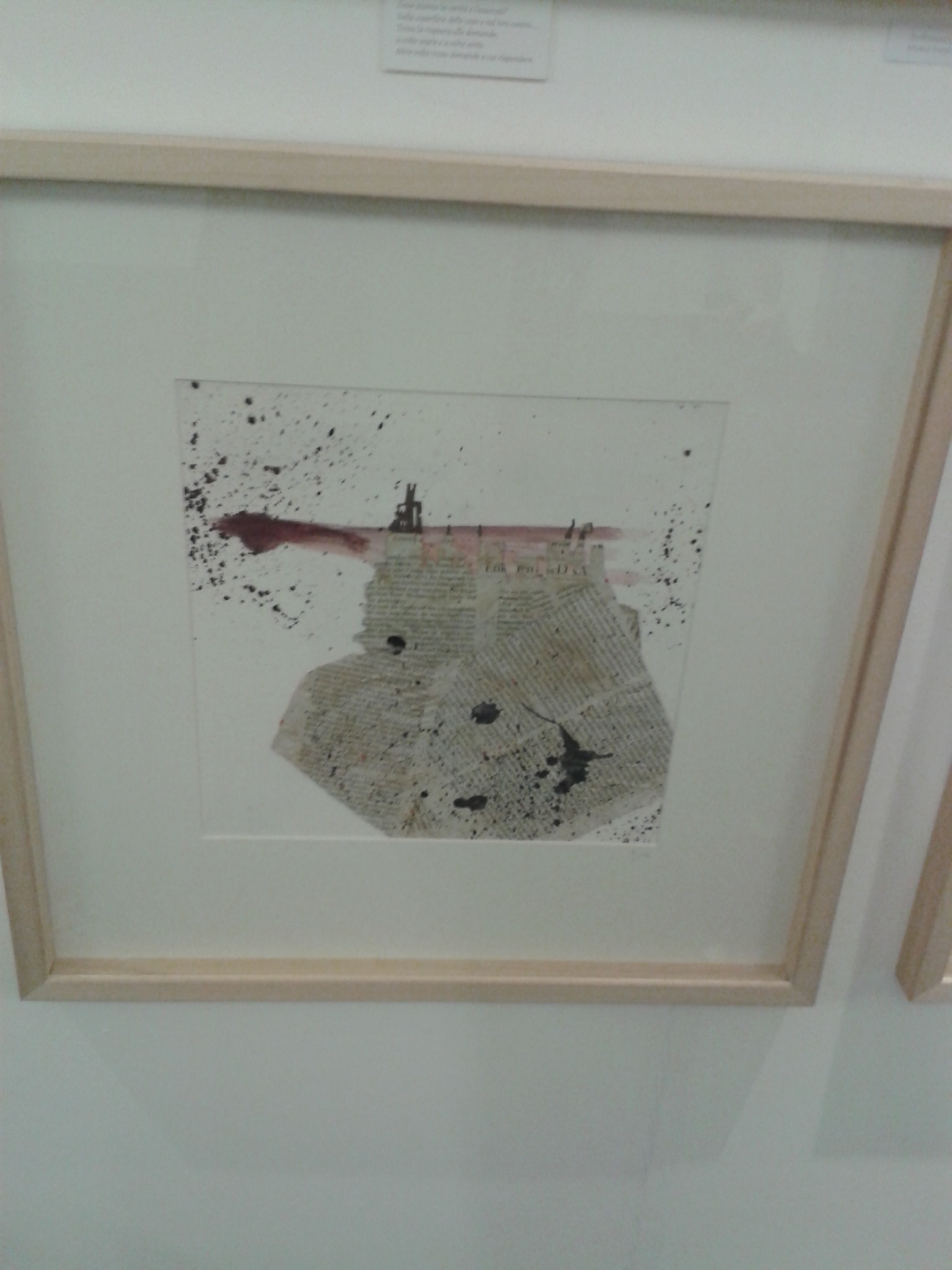
Mixed media- like the use of newsprint
20151015_183100

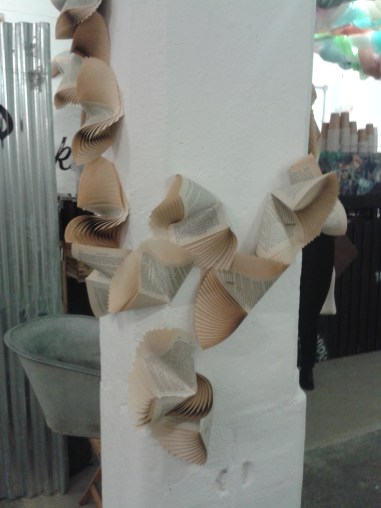
Flying books

20151015_172737

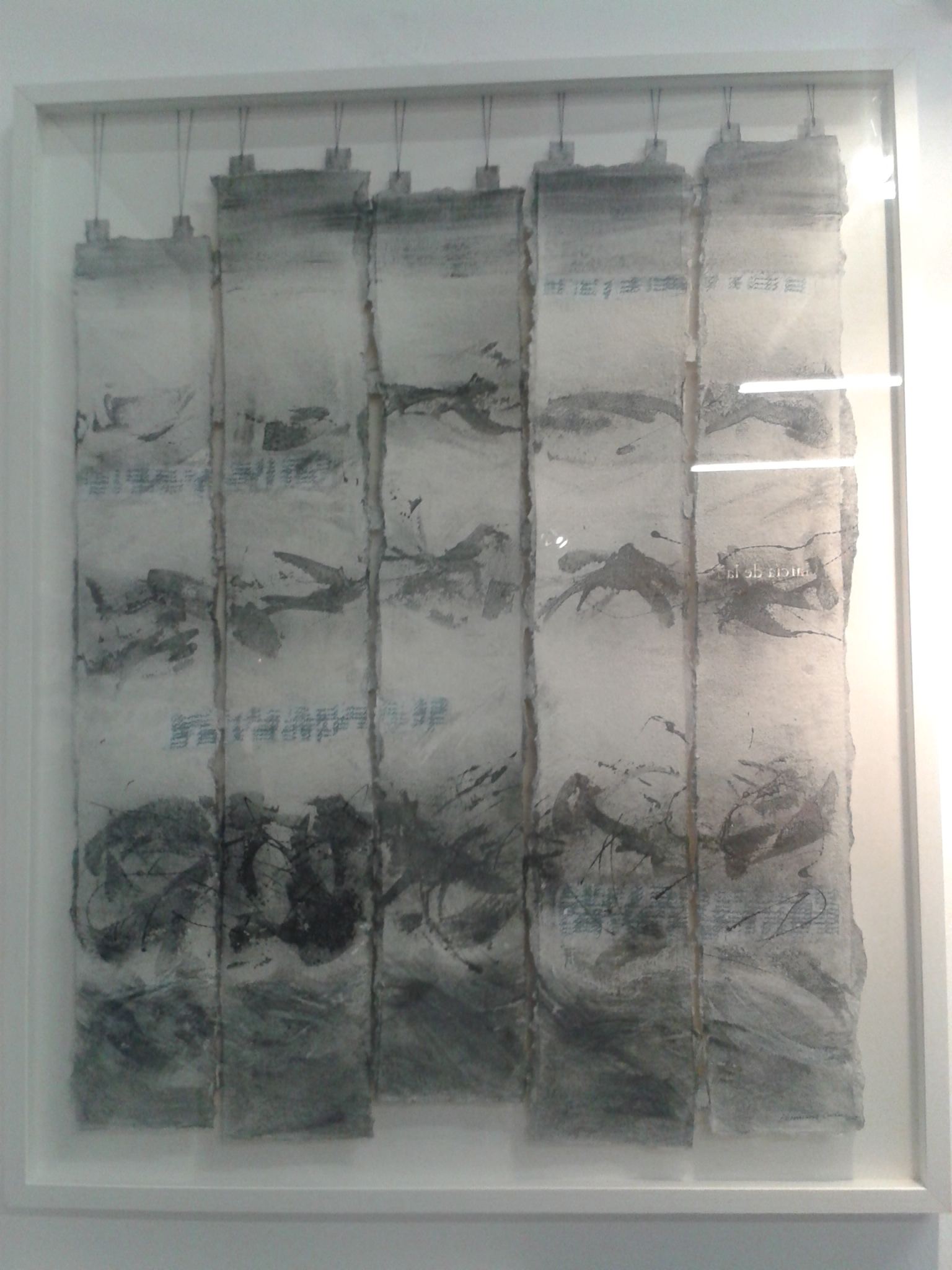
Torn drawing presented as multiples- Khadi paper, I have since been using this lovely recycled material

Trees!

20151015_173425 (1)

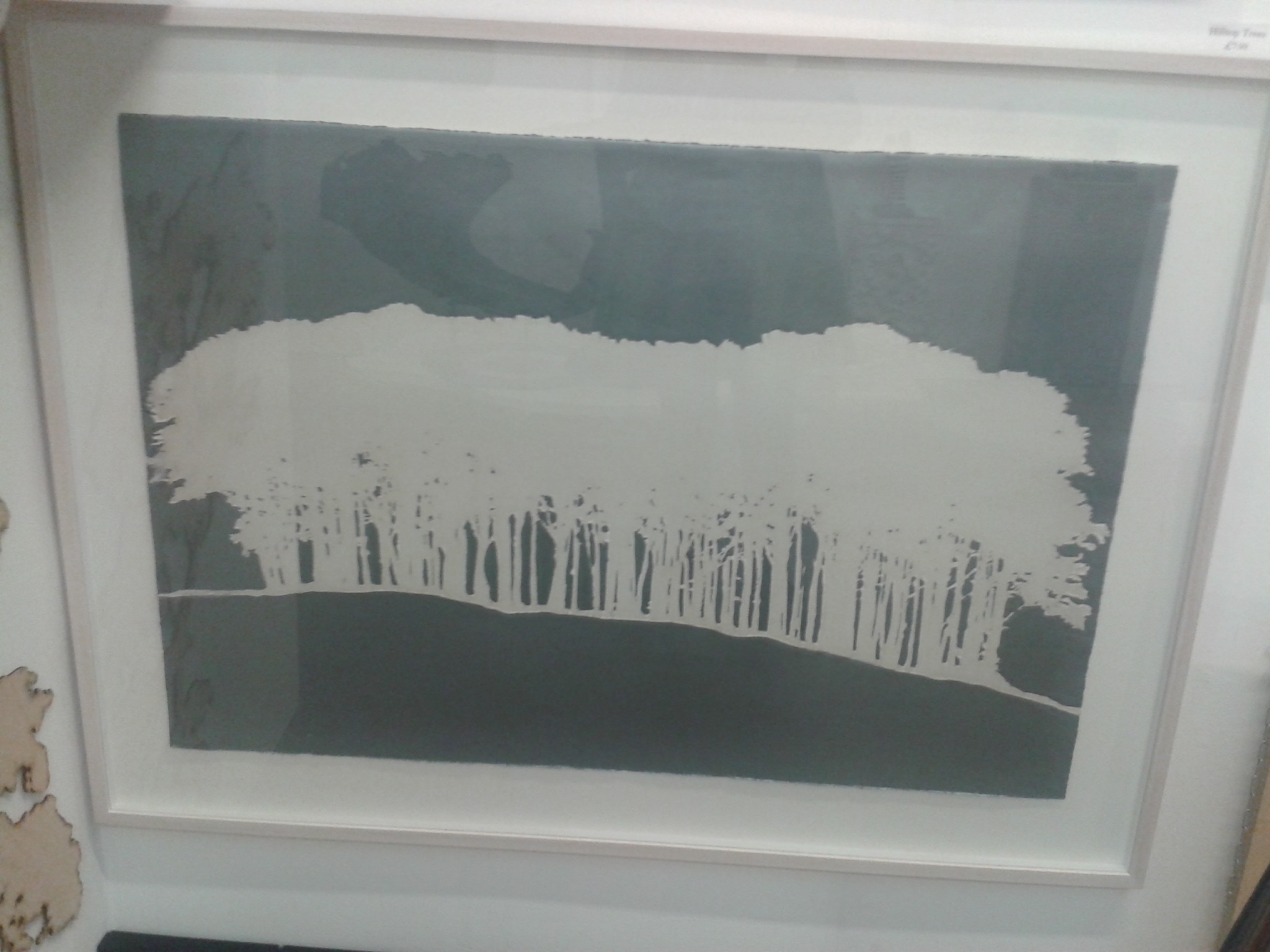
Print from laser cut wood block

20151015_183323

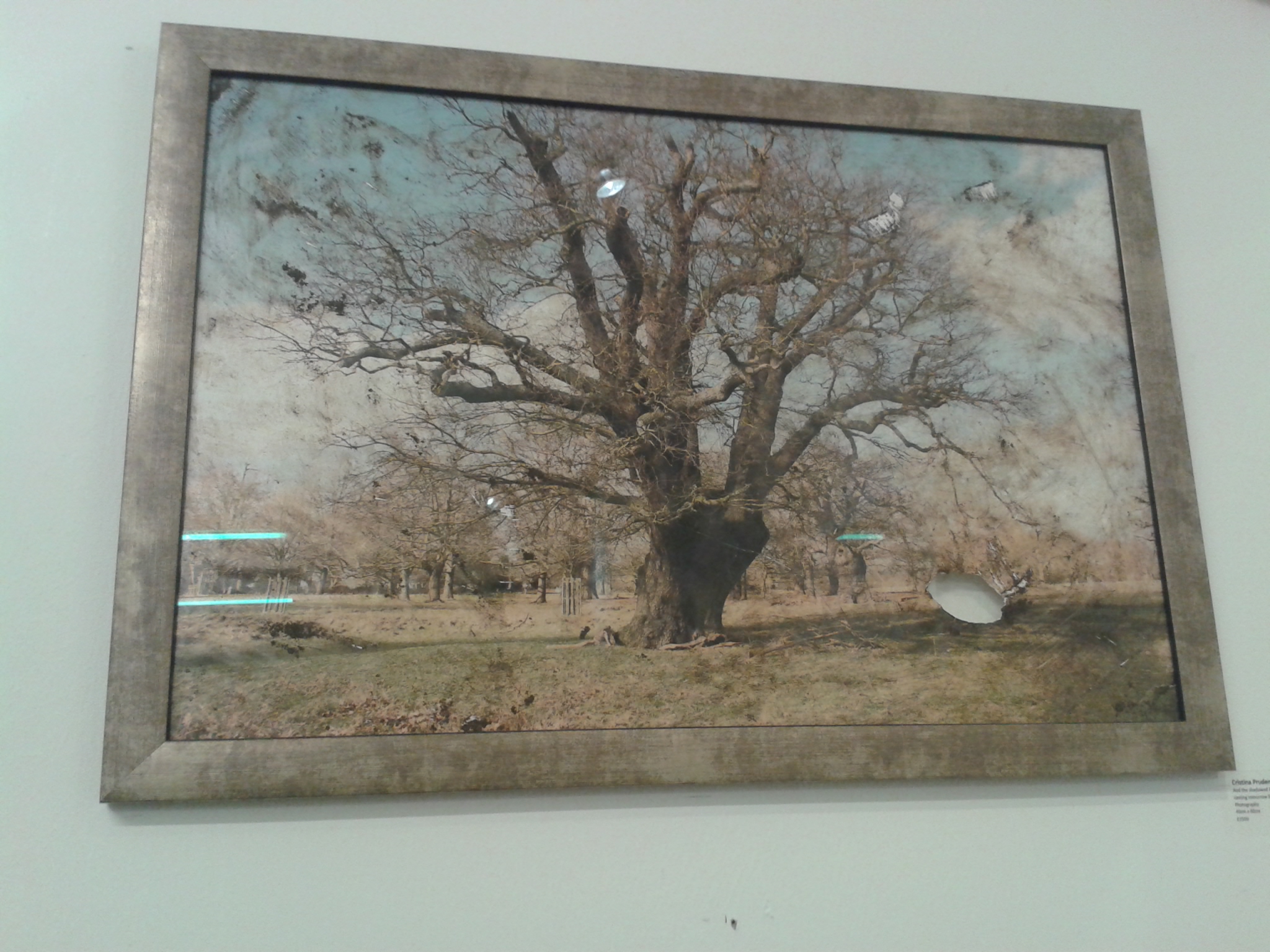
Digital photograph distressed by burying in soil for three months


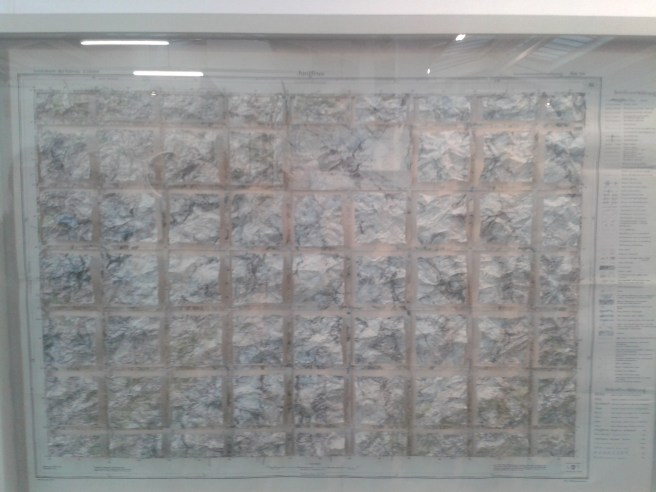
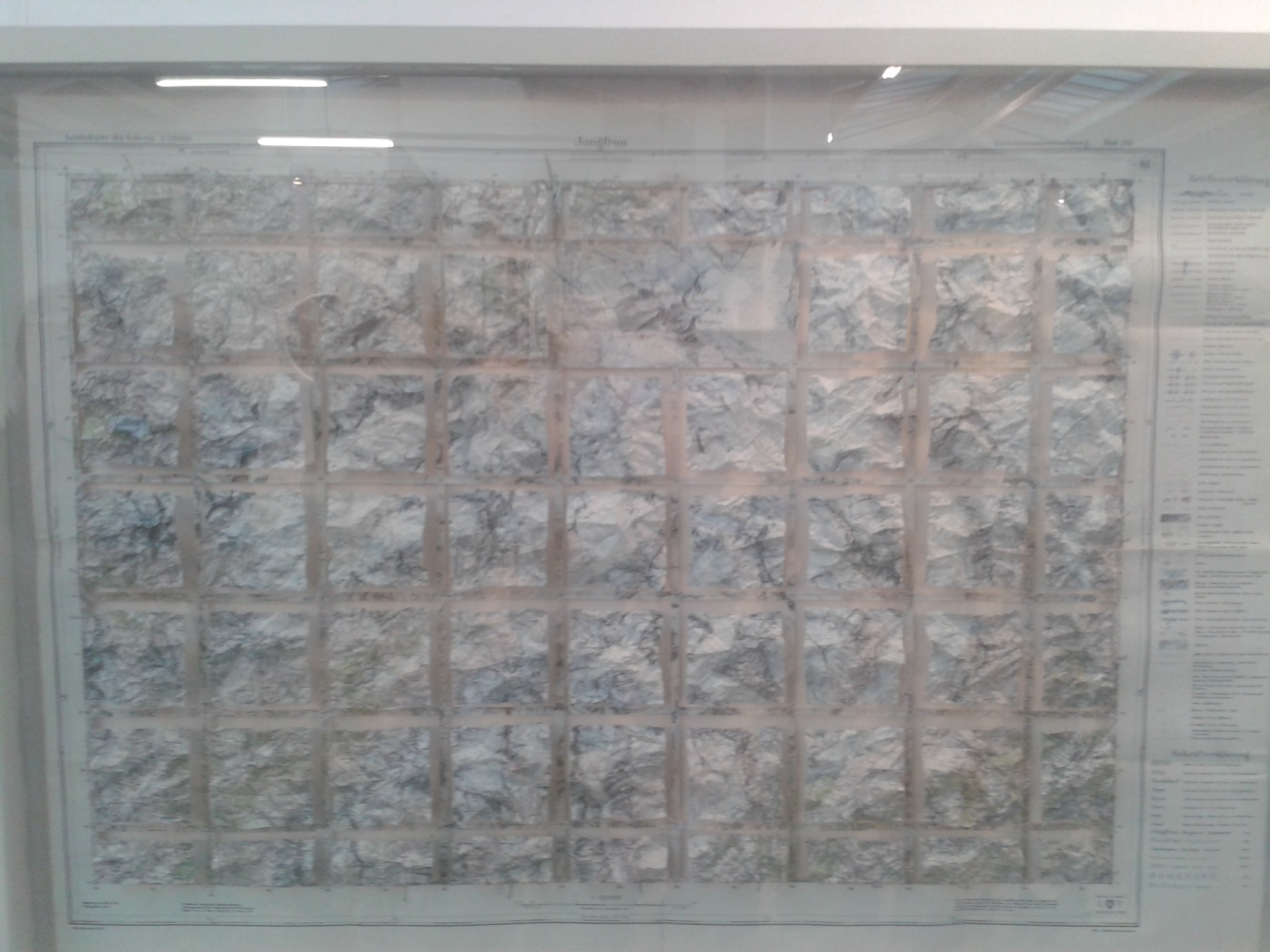
Map divided and presented as multiples

20151015_171854 (1)

20151015_171844 (1)

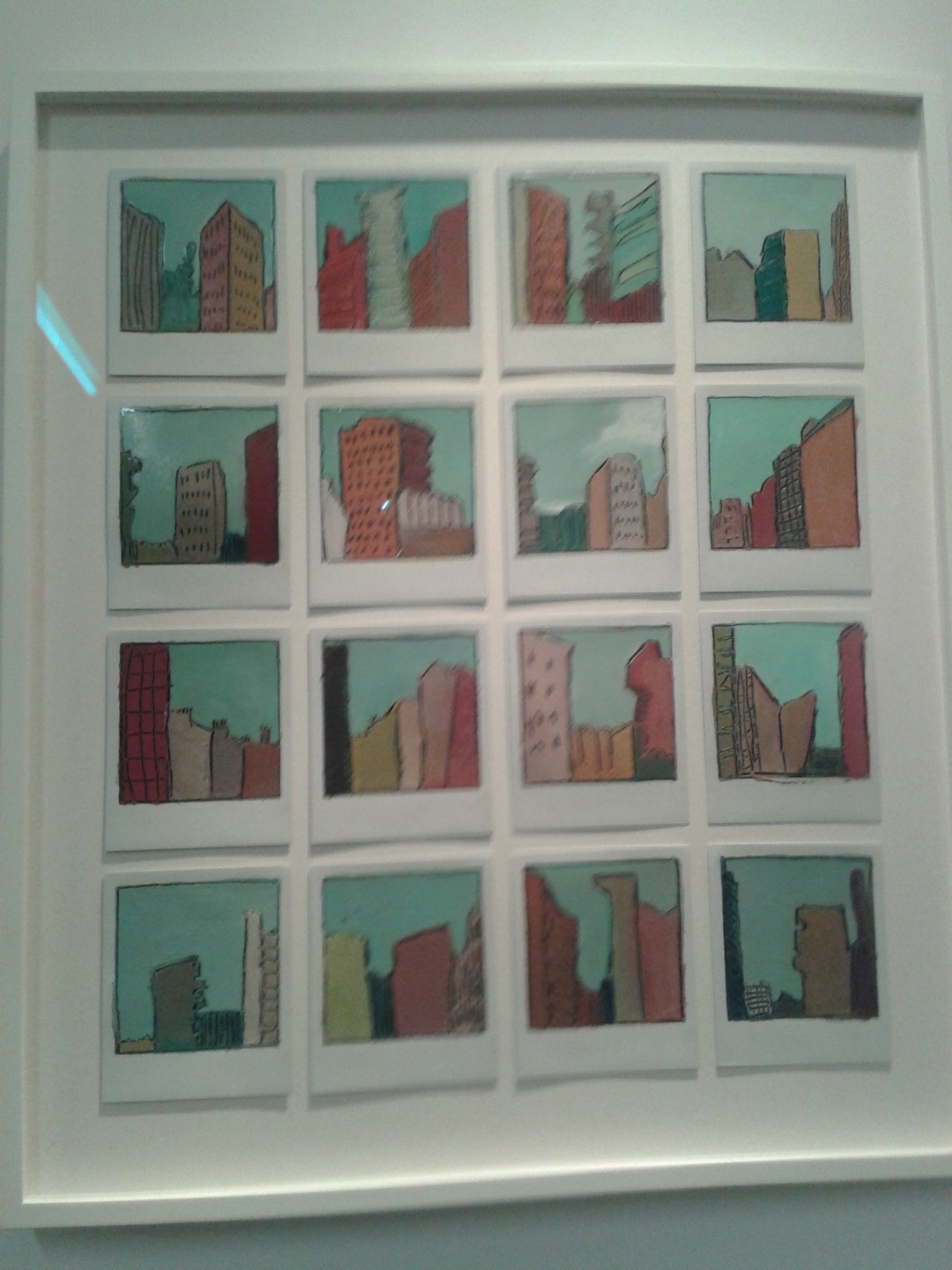
Polaroid prints painted on and presented as multiples

20151015_184601

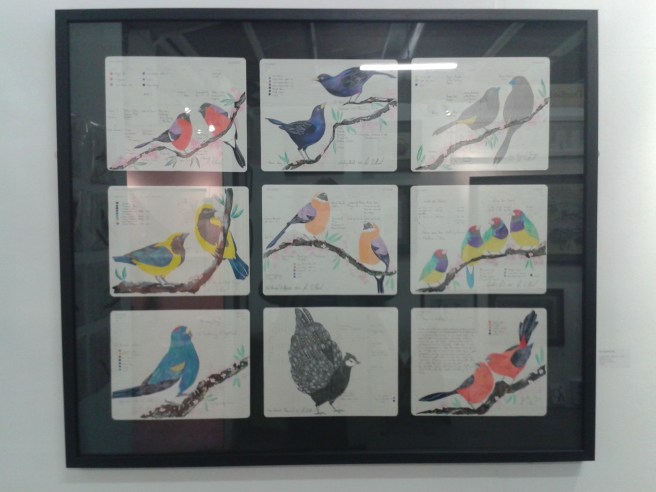
More multiples- from hand made notebook with bird drawings

20151015_181108

20151015_181207

Anna Atkins- Bradford Archive visit

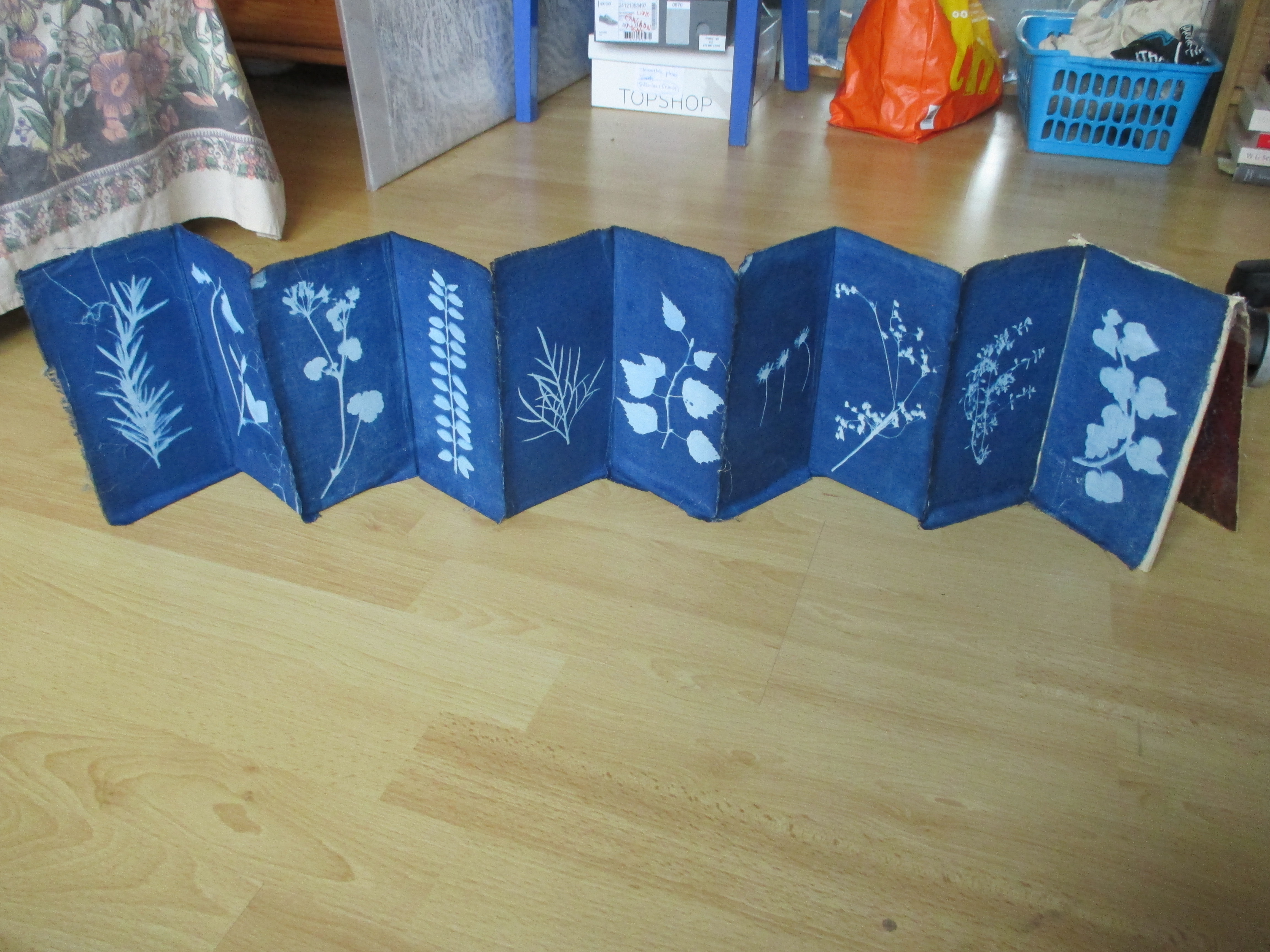
I was putting up my work at St John’s Church for the Love Arts show when a young photographer stopped and looked at my cyanotype photograms of plants from the churchyard.  He asked if I’d heard of Anna Atkins and her work, some of which is in the Bradford Media Museum Archive.  I hadn’t so booked in for a study session, which happened in early November.

Pics below:

20151116_120405

20151116_103656

20151116_103742

20151116_104224

Atkins (1799-1871) seems to be another woman artist lost from history. She was one of the earliest photographers, the first person to publish a photographically-illustrated book (as above).  Her subject, classification of plants was influenced by her father’s work as a well-known scientist, and, unusually for those times, she was encouraged by him to pursue her interests.  The family knew other prominent Victorians (including the photography pioneers, Herschel and Fox Talbot) and she collaborated with Anne Dixon on collecting, recording and ordering her botanic specimens.

The Archive had one of her original books (front of which above) and some individual cyanotypes, all of them very beautiful and precise, as well as remarkably well-preserved (cyanotypes are famously stable).  There was also a great book about her and her work:  Atkins, Anna; Larry J. Schaaf; Hans P. Kraus Jr. (1985). Sun gardens: Victorian photograms. New York: Aperture.

There was some technical information:  she used Whatman’s Turkey Mill paper, a high quality, robust and chemically clean woven paper- the ‘latest thing’ used by many artists (made from cotton fibres, sadly now unobtainable, but maybe a bit similar to the Khadi papers I have started to use);  she produced labels by bespoke drawn lead type;   she produced the chemical solution fresh each time (mixing solutions of ferric ammonium citrate and potassium ferricyanate);  the prints fade through drying and can be restored in damp atmospheres.

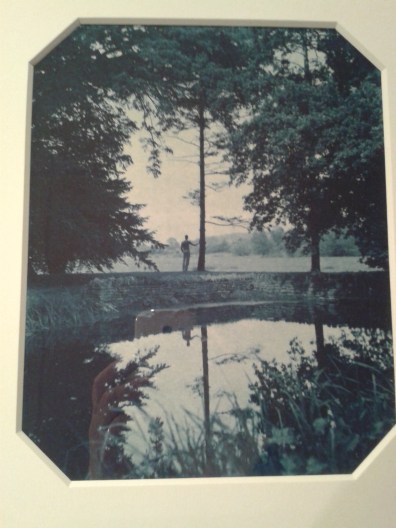
The technique lives on in architectural drawings (blueprints), as well as in fine art photography- some examples from the archive are below:
20151116_113305

John Dugdale 1990’s

20151116_104513

Nick Varley 2011, seaweed

20151116_112329

20151116_112355

Alexander Hamilton 1994

I like the indexical quality of the photograms- recording a ‘real thing’.  I have developed a habit of gathering and pressing plant material for use in photograms and lumen prints.

Leeds University Print Symposium

I attended this day event in October- a very mixed bag of presentations.  I get frustrated by the limitations of this model of academic information-giving-everyone sitting in rows listening to a series of speakers, with ‘time for questions’ at the end, often squeezed by poor time-keeping.  What this misses is:  finding out who is there in the ‘audience, why they came, what they have to offer to the information exchange;  the model of questions from the audience tends to encourage the usual suspects, often men with bees in their bonnets;  then they don’t stick to the question model and just bang on, dominating the proceedings.  How about starting with a brief introduction exercise, maybe in twos, sharing the reasons that everyone showed up?  How about sitting in a circle rather than rows? How about STRICTLY ENFORCED limits on time for presentations, followed by group discussion, self-organised as far as possible?  And a closing circle where everyone shares a learning or action point from the day?????  Useful principles for many kinds of social practice.

All that said there was some great stuff.  I learnt about the radical history of poetry in Leeds, based around the University, Stand magazine (at 144, Otley Road), and Whitelocks.  I bought a couple of Stand publications, Newcastle is Peru by Tony Harrison, and At the Stone Junction by Rodney Pybus, also about Newcastle, where some of the Stand poets moved, going on to set up Northern House and Bloodaxe Books.

There was lots of good stuff about small presses/publishers as enablers of independent thinking and dissemination of ideas.  Much nostalgia about old technology like Gestetner and other hand presses.  Lovely insights about the link between experience of the artisanal production methods and printed content (relevant for my interest in the non-digital, real, indexical).  I have an ongoing collaborative relationship with friends who run ‘The Works’, a letterpress project in an old shed.

There were entertaining anecdotes about the people from those times, resonating back to my experience of left-wing politics and activism- the balance of head and heart, the role of emotions, and the need to control them when it seems so much is at stake.

I really liked a presentation by Luke Allen who runs a small press in Manchester producing hand-made books in a minimalist style, which he calls concrete and formal poetry, at www.sinewavepeak.com He talked of the book as an environment, a place, and is highly experimental, for example feeing his books to spend time in places associated with their content to assess the effect- the absorption of what???, something, from that time in space??

He referenced Haroldo De Campos and Paul Celan, both (coincidentally?) also referenced by Alec Finlay (whose work has lots of similarities) in his ‘poetry is still beautiful’ essay, which I blogged about on this site on April 8.  Luke said that “being a person is scary, I’d rather be a place, a colour, a smell.  When I’m tired I’d rather be a place, a host for work”. I love these thoughts.  Have used the concept of host in my working life- a welcoming, supportive principle which helps things happen without the process being overly controlled by the organiser.  I also like the idea of being a book rather than a person, and a book being a host.

Another innovator I hadn’t heard of before is Bob Cobbings, the ‘Jackson Pollock of office duplication’!  Here is the header for his Wikipedia entry “Bob Cobbing was a British sound, visual, concrete and performance poet who was a central figure in the British Poetry Revival.”  His devotion to self-published, small presses, experimental artists books, sound poetry, collaboration, and radical politics was inspirational, though he was obviously an awkward and quite singular person, but fun.  Fantastic all round!!

I need to find out more about concrete poetry and innovative presentation for curating the gathered material on my planned walk- plants, flowers, names from gravestones (women’s names).  The idea of poem-objects, like Alec Finlay’s beautifully framed handkerchiefs embroidered with text.

Someone talked about the direct degradation of language back to the poetic (echoes of Simon Armitage).

Finally there was a session about  Longbarrow Press based in Sheffield.  I bought one of their hand-made books, The Ascent of Kinder Scout, by Peter Riley, commemorating the famous trespass challenging restrictions of access by land-owners, and pivotal to the ongoing campaign for the ‘right to roam’.  The presenter talked about book art and experiments in form linked to content- saying that ‘through craft, art becomes collective’.  Lots of stuff about place, emotion, claiming significance for the provenance of all aspects of creative production.  Very creative, grounded ideologically and playful.  Good balance.

Rommi Smith made an important point about the whole event making a glaring omission by neglecting to include Peepal Tree Press, a nationally significant publisher of Caribbean and Black British writers based in Leeds.

Feminist research seminar

Bianca Elzenbaumer sent me information about this day event at Sheffield Hallam.  It was a bit disappointing- an event mostly for PhD students to network and present.  It was rather esoteric and, with one or two exceptions, not particularly relevant.  It was, however, encouraging to see so many (mostly) young women happily inhabiting the feminist identity and taking space for their distinct perspectives.  Issues covered included:

  • Women’s specific use of the internet for solidarity and support, and sharing women’s knowledge (about knitting and craft in this example).
  • An in-depth study of how women’s anxiety affects their freedom to negotiate urban space
  • The use of body-mapping- inviting women to draw their bodies in relation to their experience of menstruation.  This was really interesting- carried out by a young doctor in the face of her (male) colleagues’ disapproval- and producing truly beautiful and powerful images.
  • There was a session about transgender issues which I found interesting but ultimately frustrating since it revisited the bitter arguments about no-platforming.

Bracha Ettinger sessions and conversation event

I have already blogged about the sessions I attended at the Tetley in the summer, at https://lesleyeleanorwood.com/2015/07/14/the-ettinger-gaze/

After discussing these events with my friends who are working with me on Women Conversation: Leeds (https://www.facebook.com/Women-Conversation-Leeds-1420746721560593/?fref=ts ), and at Bianca’s feminist reading group, I decided, with others, to set up a conversation event about Ettinger’s work.  We looked at Youtube film of one of her lectures and I gave a short presentation (and hand-out) Seminar handout

The event was interesting and we decided to set up a regular converation event- Cafe Feministique, in the New Year.

Ilkley Literature Festival

I regularly attend ILF and this year there were several stand-out talks.  Simon Armitage talked about his books about walking (long-distance footpaths in the Pennines and on the South-West coast).  Great ideas about walking and creativity, poeisis, being in nature and meeting people on the way.  Made lots of notes and drew heavily on these ideas for my dissertation.

John Thackara talked about his book ‘How to Thrive in the Next Economy’.  Both he and Paul Mason (talking about his new book, Post-Capitalism) were brilliant, especially in the way their thoughts inspire a small measure of confidence in the future (as opposed to gloom and doom).  Thackara runs a company called The Doors of Perception’ which shares information and supports networks on how people are living and supporting themselves sustainably around the world, often in dire poverty, but making good lives.  He and Mason show how sharing can (indeed is) remaking the world sustainably and more equitably.  Mason has a theory that capitalism is dying anyway and that a new human world is evolving alongside its final stages.

Work at St John’s

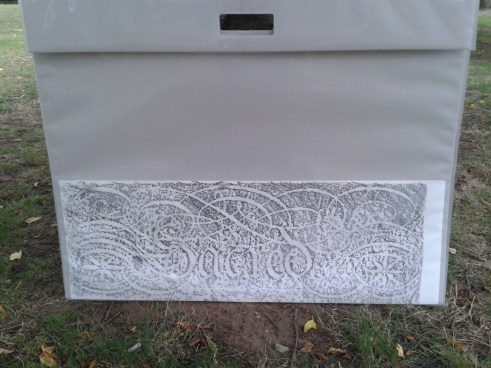
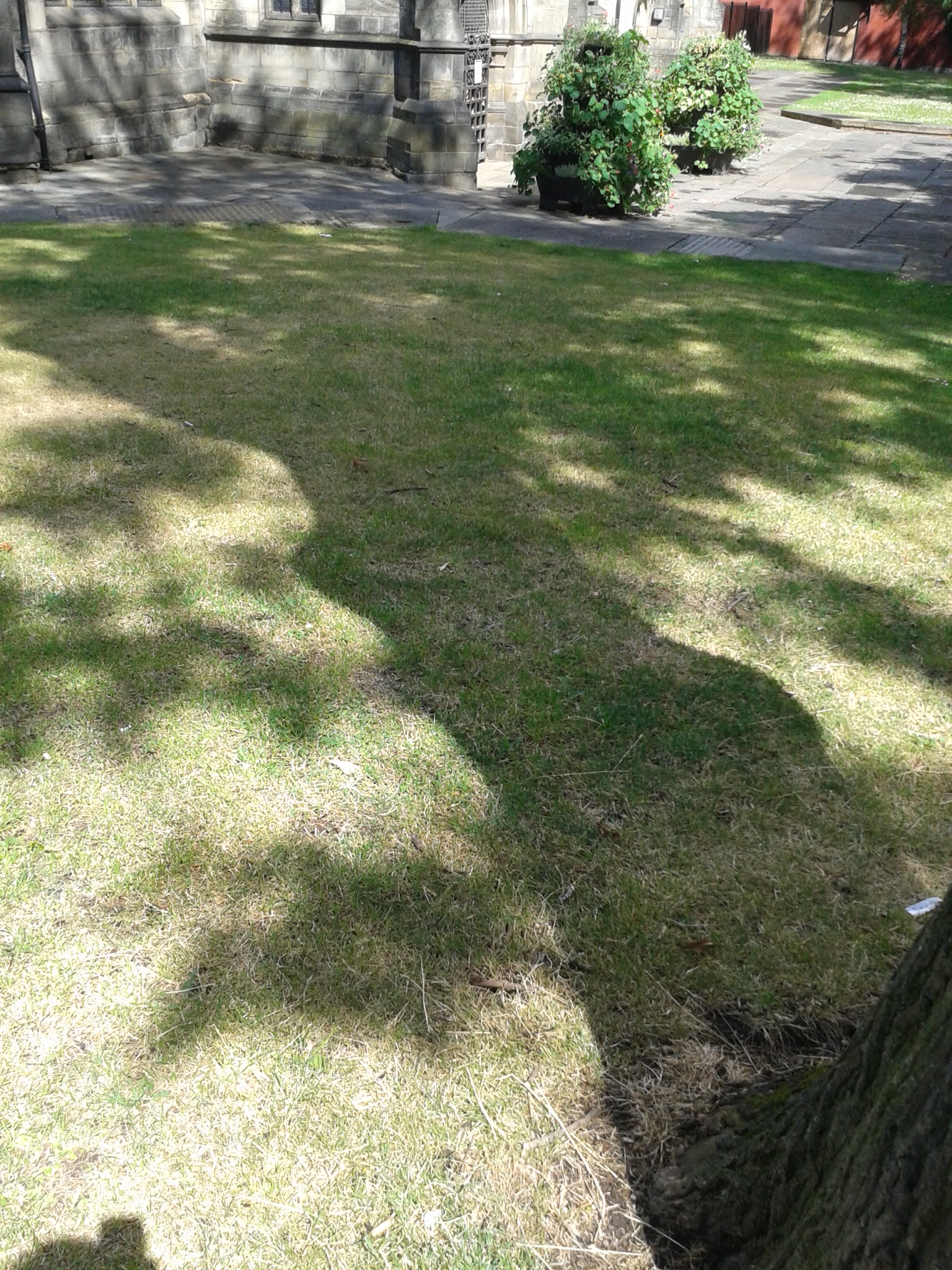
I contributed to the Love Arts Festival in October this year, delivering site-specific piece based on exploration of the grounds of the church.  The work comprised rubbings and a paper cast of several versions of the word Sacred engraved on gravestones, and a hand-made book of cyanotype prints, photograms of pressed plant material from the graveyard.  I had other ideas and took photographs of shadows.  The main learning from this process, seen as a bit of action research, was the need to spend time, look, notice and respond.  There was a lot of stuff-gathering and opportunities for conversation with passers-by, which could (should) have been an artwork in itself.  Need to think about this for future work- sound recording, photos, interactive platforms….

Alnmouth Art Festival & Loitering with Intent

Alnmouth is a small town on the Northumberland coast- one of my significant places.  It also hosts a small Art Festival each summer.  I have applied to be included in the 2016 festival.  It made me write an artist’s statement and the Gallery page on this site, a good exercise in making me define my work, select images and ordering them so as to present a coherent account of my practice.

Loitering with Intent is the name of another show I heard about through the Walking Artists Network.  It will be at Manchester’s People’s History Museum in July, and I have applied to show my work there also.  It meant that I had to do more work on the Gallery, and on the image files on my PC.

Corridor Show

I was asked to put up a show of my work in the corridor space outside the MA room at College.  However intimidated I might have felt, I had to say a grateful yes to the invitation, so I am currently considering how and what to show from my work, as well as making some new, large-scale pieces.  I have measured up, decided what spaces to use, and started working on the details.  I am planning a conversation event to accompany the show, with specific people invited to discuss how artists can catch the ‘genius loci’, and will pull in resources from Leeds Creative Timebank to help.

Curation, curation, curation

I was advised by my tutor to research cutting-edge, contemporary curatorial practice, for the same reason, I think, that I was invited to put up the Corridor Show, that is, to learn how to present my work, which is multifarious and there’s just lots of it, in a creative way, which tells the story and conveys meaning in the way I want.

So I was keen  to participate in a short course on curation led by Catriona and Kerstin, the Curation team at College. The course provided information about the history of curation and the contemporary ’scene’, supported a critical reading on current debates in the field (based on an article from the current issue of Art Monthly by Andrew Hunt), and put up an exhibition of Louise Bourgeois prints.  There were great hand-outs about the practical tricks-of-the-trade and we learnt about transport and handling of work for exhibition (amazing opportunity to get close to original work by LB).  We really got to know the work through time taken to consider exactly how they should be grouped and hung.  I had seen the same travelling exhibition in a gallery in Hebden Bridge where the show was hung in a very boring manner.  This presentation was much better and it worked well in the College’s Blenheim Walk gallery space.

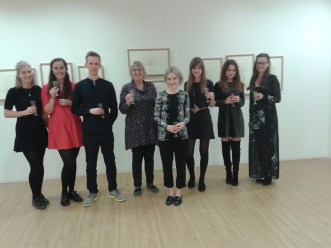
We also helped with the opening evening (pic of course members and curators below) and a linked seminar on the following Saturday entitled ‘The Invisible Woman’.  This gave me the idea of the conversation event to accompany the Corridor Show.
20151119_163648

I have had my radar tuned in to the art of curation ever since.  Particularly relevant during two recent visits to London (to the Other Art Fair, already commented on above) and for a ‘field trip’ I undertook in November (described below).

London field trip

I planned this to see shows and visit galleries.  Went to the Ai Wei Wei exhibition at the RA.  Amazing in scope, scale and the power of his political messages.

20151027_110200

This is my picture of a girl in front of the lists of children killed by the Szechuan earthquake, on which Ai Wei Wei has campaigned for the state to be truthful about the causes and numbers of casualties.  The list of children’s names filled two huge walls in the gallery.
20151027_102205

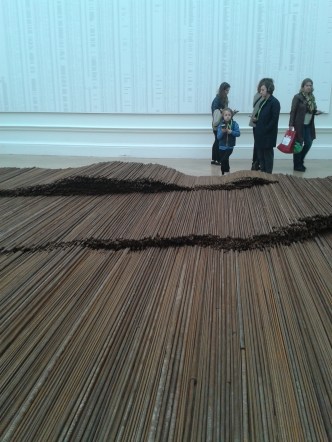
These are steel rods painstakingly reclaimed from the rubble of the quake by Ai Wei Wei, straightened and displayed on the floor.
20151027_100441

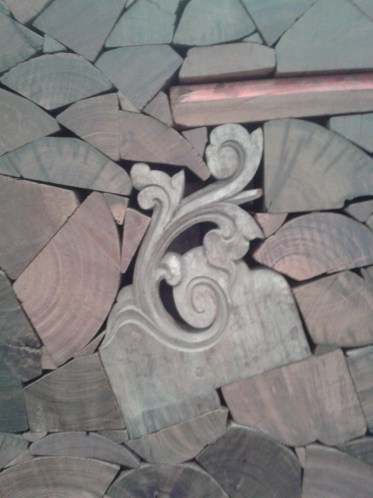
This is more rubble restored to order- from the artist’s studio complex which was demolished as part of the developing campaign of state persecution, which culminated in his arrest and imprisonment.

20151027_104953

Section of wall at the RA.  I have asked if I could make a paper cast of this.

I also visited a brilliant exhibition of Lee Miller’s war photography.  These pics are of Miller (left) and Margaret Bourke-White, both of whom were stationed in Europe as war photographers.  This show was both inspiring and harrowing.  Definitely a woman’s eye (I had never before seen any photographs on the issue of mass rapes of German women at the end of the war by Allied soldiers, terribly moving- one of a mother trying to cover up the exposed body of her daughter), and with the aim of reaching a female audience, especially in the images which celebrate women’s contribution to the war effort on the Home Front.

I looked up other interesting shows and found one by Cartier-Bresson on New Bond Street.  It was a great show but the context was quite disturbing. New Bond Street is where London’s hyper-rich go shopping so there were many, many galleries with great work, by many eminent artists, and it was all for sale.  No charge to get in (but a raised eyebrow for me in my scruff) and lots to see, all tastefully and effectively curated but it left me feeling empty!

I had a better time at an Arts Centre in West Hampstead which was hosting a show by film-maker Ben Rivers, which included a selection of work curated by him called Edgelands- an ongoing interest of mine.  There were some beautiful images and the accompanying book selection in the gallery shop was full of goodies.

His commentary on the show was titled ‘The World Needs More Magicians’.  I loved this show and have lots of pics and notes.

I also shopped- for women solo travel books and map-related items from Stanford’s in the West End, and for beautiful paper at Shepherd’s in Victoria, including the wonderful Khadi paper I first spotted at the Other Art Fair, available in gorgeous 30cm diameter circles, used below for developing B&W image using liquid light.

IMG_0611

British Art Show

I have made one visit to this show and will go again.  There were loads of good things but I need to return to do it justice.  I have included my annotated catalogue for hand-in.

Hope Generator

This is a lovely local project mixing social practice with psychogeography and walking art  I made a good contact in this group and am hoping to work more with them.

Have already blogged about the project at https://lesleyeleanorwood.com/2015/11/10/generating-hope/

Women Conversation Leeds

IMG_0437

This bit of social practice continues at https://www.facebook.com/Women-Conversation-Leeds-1420746721560593/?fref=ts

We are thinking of a monthly conversation event- Cafe Feministique.

Trips- Scotland, Northumberland

These visits have been very useful, producing images, stories, experiences and other gathered stuff.  I have blogged already about the walk I did with friends around Isaac’s Tea Trail .  I’m still working with images of trees, industrial ruins and the moorland landscape from then and have some stones to use for liquid light.

Sweet Cicely, and line of trees from Northumberland, cyanotypes
20151203_133431

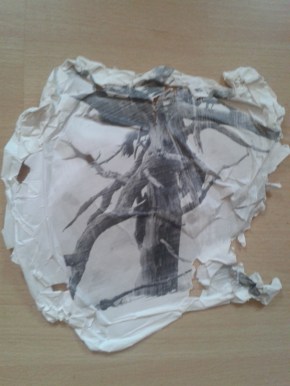
Liquid light on Bible paper

I had time alone which was useful and struck up several very interesting conversations.  My matriline walk will pass again through this area so I am looking forward to returning.

I gathered lots of stones from the beach at Ardmair Bay in Scotland on a visit there in April, and lots of images which I continue to use.  The stones are schist and a lovely blue-grey, worn flat by the sea.  I need to return to here again (for about the sixth time in the last few years).

IMG_0469

I also have a large collection of plant material from these several locations ready to use for photograms.


Manchester

I had a fantastic weekend in the Manchester for the International Festival.

20150711_115931

Exterior of Manchester City Art Gallery transformed into a garden.

20150710_164030

Contemporary Chinese art exhibition at the Whitworth Gallery, Ai Wei Wei’s axe-heads on the floor.  I like his display of humble objects as multiples, to restore them to significance (like the sunflower seeds).

20150711_133953

Statue of Abraham Lincoln commemorating the support of cotton-workers in Manchester for the struggle to defeat slavery in the US.

Left Bank show:  Space and Place

There was an excellent show, for one night only at Left Bank in Leeds.  It was on the theme of place and here are some images:

20150715_190122

Potternewton Hall/trees

I am developing a fascination for trees, especially bare of their leaves in winter.  The project at Potternewton Hall (which I decided not to go ahead with)  provided an incentive to look at the interesting collection of trees there (pictures below of a Tulip Tree and Gingko).

20151004_174523

The images below are taken by my phone and will be used for cyanotype prints, in collections, and to make into cards and framed prints for sale and exhibition locally (they are mostly of the area where I live).

Trees and shadows

20150710_162617

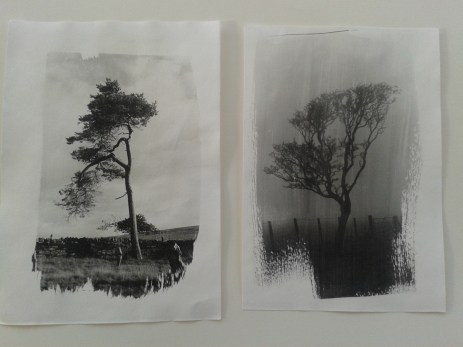
Images below are from b&w film negatives developed onto a range of substrates using liquid light.

IMG_0611

20151113_111753


The research in this case is going out and taking photographs, taking account of composition, light conditions and conceptual content.  Alongside this I have been consulting reference books to identify and know more about tree species.

I particularly like the monochrome character of bare trees and the grace of their overall form, together with the delicately patterned tracery of their branches.  I like to catch them in silhouette on the horizon with only sky behind- cloud formation and good light add interest.


Research reflections

IMG_0615

This is the current state of the piles of books in my little studio room.  I have a structure for my dissertation, an alphabetically listed Bibliography of ~80 references, and the same list arranged by subject.  I still need to do more detailed secondary searching into the source material but I now feel that I have a solid framework to support the actual writing of the text.  So far I have about 1000 words (aim is 6-8,000).  The piles of books are arranged by subject/chapter in the order they come in the essay.  Not sure if it’s too much (or too little)?!

Either way the walking/wandering metaphor for my research and practice development continues to be the best descriptor for the process.  There’s so much information out there, easily available, so many artists doing so many things- the more I look the more there is.  The issue is setting some limits, knowing that I don’t have to put everything in, and that I will need to keep on researching, reading and experimenting right through this year.

I thought I’d got the subject down to a suitable size- three chapters:

  • Human relationship to the earth, especially in times of environmental crisis- theory, philosophy, humanistic geography, how art sits in this terrain
  • Art and walking, mostly contemporary practice, kicked off with a short section on W G Sebald
  • My own walking project- its purpose/s, feminist aspects, and my methodology for ‘catching’ the experience

In terms of research the material I have gathered has come to me in many, many ways.  Very hard to apply academic concepts of research methodology, except (as usual, retrospectively)- my best description is wandering, seemingly lost, in the forest.  Of course, where I go and what I look for is not accidental, but many of the outcomes seem accidental/subtle/just under the surface of consciousness.  Some of the material introduced to us in Karen Tobias-Green’s lectures theorise this very usefully, and I do feel the ‘mystery’ of research as creative exploration, in many disciplines, not just the arts.
So… I need to present this research journey alongside the dissertation.  I can see a number of distinct elements.  To be continued……..

Generating Hope

Hope generator

Last Friday I took part in a project led by a group of local artists some of whom I have got to know over the last year or so.  The Hope Generator is a joint project by the Institute for Crazy Dancing and i-move and the main organisers included some friends from Tea and Tolerance and a new face- Vanessa Grasse.

Vanessa’s name rang a bell from a chapter on women in On Walking by Phil Smith.  I didn’t finish this book, finding it rather repetitive.  The account follows in W.G. Sebald’s footsteps on the route around East Anglia described in The Rings of Saturn (of which more another time).  I did, however, really appreciate the chapter ‘Women and Walking’, which was a welcome glance at gender issues in this field.  Vanessa was one of several artists cited by the author as breaking the essentialist mould of women’s walking art practice as determined/constrained by fear and social convention.

It was great to meet Vanessa and I hope we will be getting together again to talk about collaborating, possibly also with the Hope Generator group.  This group has set up a Facebook page with ~350 members, recruited through social media and personal connections.  Their aim is to re-animate the Chapeltown landscape, seeking out routes and landmarks which identify the hopeful and the positive in an area which is often seen as deprived and beset with crime, then guiding groups of people using a range of techniques to help everyone to look afresh.  All of the six sessions organised over the weekend Oct 24/5 were fully booked with a diverse range of people, mostly local.  I went on the early evening walk and had to leave early.

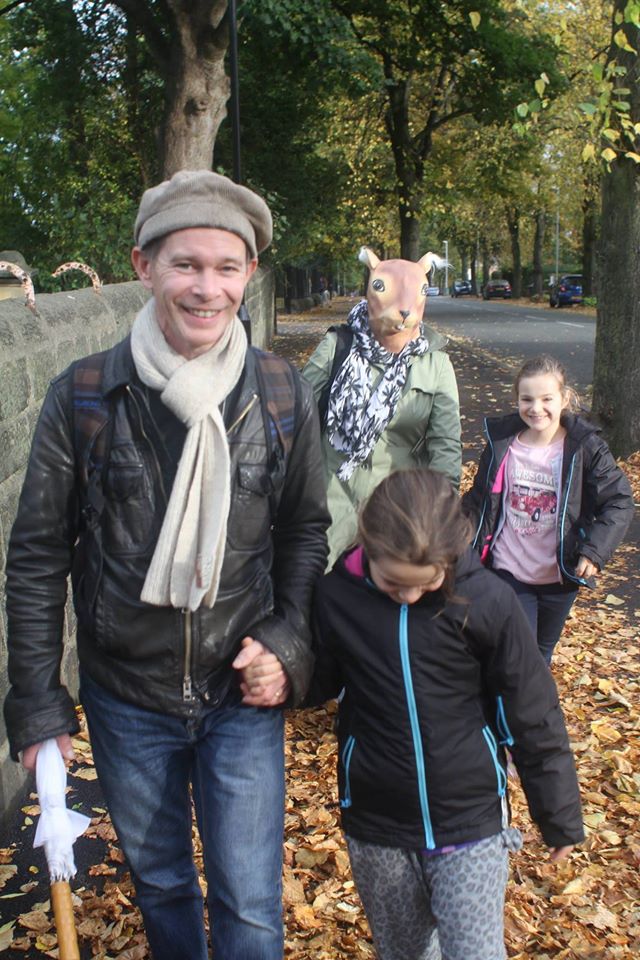
It felt like first steps in this kind of work in the area- there are so many stories and worlds to find and excavate in Chapeltown, and it would have been good if there could have been more opportunities for participants to weave in their knowledge and thoughts.  I liked some of the methods for getting people to look anew- walking backwards and with closed eyes, being asked to find things in the urban landscape, smelling the herbs in the community garden, being shown places of historic significance, stopping to ponder challenging, open questions, stopping for a cup of tea and a Hope biscuit.  I especially liked the person in a squirrel mask who was sitting quietly at the top of the path which we had walked with our eyes shut!

The aims seemed very ambitious, in relation to the scale of the event.  I’m not sure if the organisers see it as a first step to engaging more people, gathering more stories, doing more walks, getting it out via social media as a series of walk templates which people can add to and use independently? Then there is the question of how the work is recorded.  There are lots of photographs on the Facebook page, contributed by a range of people, and I think it was being filmed but there might be more that could be done- gathering from the space, intervening (there was some of this, picking fragrant herbs to keep, the post box whose MON sign was inverted to make NOW) but maybe more.  I don’t think participants were asked to comment or add their stories and experiences- maybe this would add to the richness captured.

It was an interesting and positive experience, carried out by people who are very creative and work with integrity.  I hope it is something which can be built on for more real re-generation.

Research ramblings

The walk as art- some role models

When I try to describe my research activity I often arrive at metaphors relating closely to walking- rambling, stumbling upon, encountering, getting lost and rediscovering my path, using landmarks to point the way.  This resonates well with my site-specific practice, and idea of my final piece.  As usual then, I have recently stumbled upon interesting and relevant material, as below.

Ramblings on Radio 4

The new series of Ramblings on Radio 4 is titled Artists’ Ways, six programmes about artists whose practice includes walking, of which three have been especially pertinent to the walk I am planning as my MA project.  They are:

  • Carolyn Savidge’s walk, from her front door out onto the hills and levels of north Somerset. On the way she describes the written, photographic and sound based project she has created since losing her husband to cancer.  http://www.carolynsavidge.co.uk/
  • Matthew Hopwood’s project ‘A Human Love Story’ which takes him walking through England as a pilgrim, seeking hospitality where it is offered, meeting people on the way who share their love stories, which Matthew records and publishes on his online audio archive.   http://www.ahumanlovestory.com/
  • Louise Ann Wilson, a sceneographer, who has created a specific walk,in Warnscale in the Lake District, with an accompanying guide and artbook. The walk is for women who are childless by circumstance and offers a ritual through which women who have missed the life-event of biological motherhood can be acknowledged and can come to terms with that absence.  https://louiseannwilson.com/

All three of these walks resonate with the walk I am planning.  I hope to gather stories from people I meet on the way, will be recording my experience through a range of media, and my journey has strong emotional aspects- the travels between Leeds and Newcastle of four generations of mothers and daughters, all called Eleanor, who will be connected through the walk.

Walking Away and Walking Home

I attended a talk by Simon Armitage about his recent book Walking Away, and read his previous book Walking Home, both about a long-distance walk, the Pennine Way and the North Devon and Cornwall Coastal Path, respectively.  There was lots of inspiration in both the talk and the book.  The idea of a walk as a creative structure is useful- creativity comes from restlessness and curiosity, thus provoking the urge to move, to be outside, in the landscape, meeting people, sharing experiences, NOTICING.  He talked about the experience of solitary walking, the rhythm of heartbeat and footfall, the brain’s acquiescence to daydream.  His observation, that experience was expressed more directly through poetry, than through prose, which he defined as ‘synthetic’, was revelatory.  Our experience has to go through a fixing/translating process to be expressed factually/prosaically, often losing the purity and power of the original.  By contrast, poeisis, making poetic, allows more meaning to be brought forth.  This could mean that imaginative expression is about not translating but seeking/absorbing the poetic, taking a step back from conscious understanding to experiencing and expressing more directly the things, meanings and beauty found in place.  The activity of walking may help this to happen.  He also talked about structuring his observations in ways that opened him up to the things on his way (he described walking as moving through a continuously changing world)- what objects, what plants, what colours, what shapes, what forms, what substances?  And what does it feel like to be the thing observed, whatever it might be.  He made notes throughout these journeys (slightly longer than my ~150 miles), and took  around three months to process the material into the books and poems.             This mechanism of poetry- to evoke and tell a story more obliquely and intriguingly, more beautifully than prose or factual description- is what I aspire to in my practice- on my walk, conveying meaning in a range of ways:  visually;  through text and writing;  by gathering, recording and reassembling things and traces of place;  seeking and recording the stories waiting to be told;  and allowing the happenstance of conversation and connection.

Lone Traveller

I was lent this book by Anne Mustoe, a retired headteacher in her sixties who has cycled several very long-distance journeys, the Silk Road, the ‘Top End’ and deserts of Australia and right across South America.  She joins Robyn Davidson (Tracks), Dervla Murphy (Full Tilt and many other books) and Cheryl Strayed (Wild) as lone women travellers whose books have been successful and inspiring.  I am excited to be undertaking a long journey through countryside, on my own and carrying everything as I go.  A little daunted and needful of greater fitness and less weight, but delighted to be doing something that women my age aren’t really supposed to do.

Trees as mother

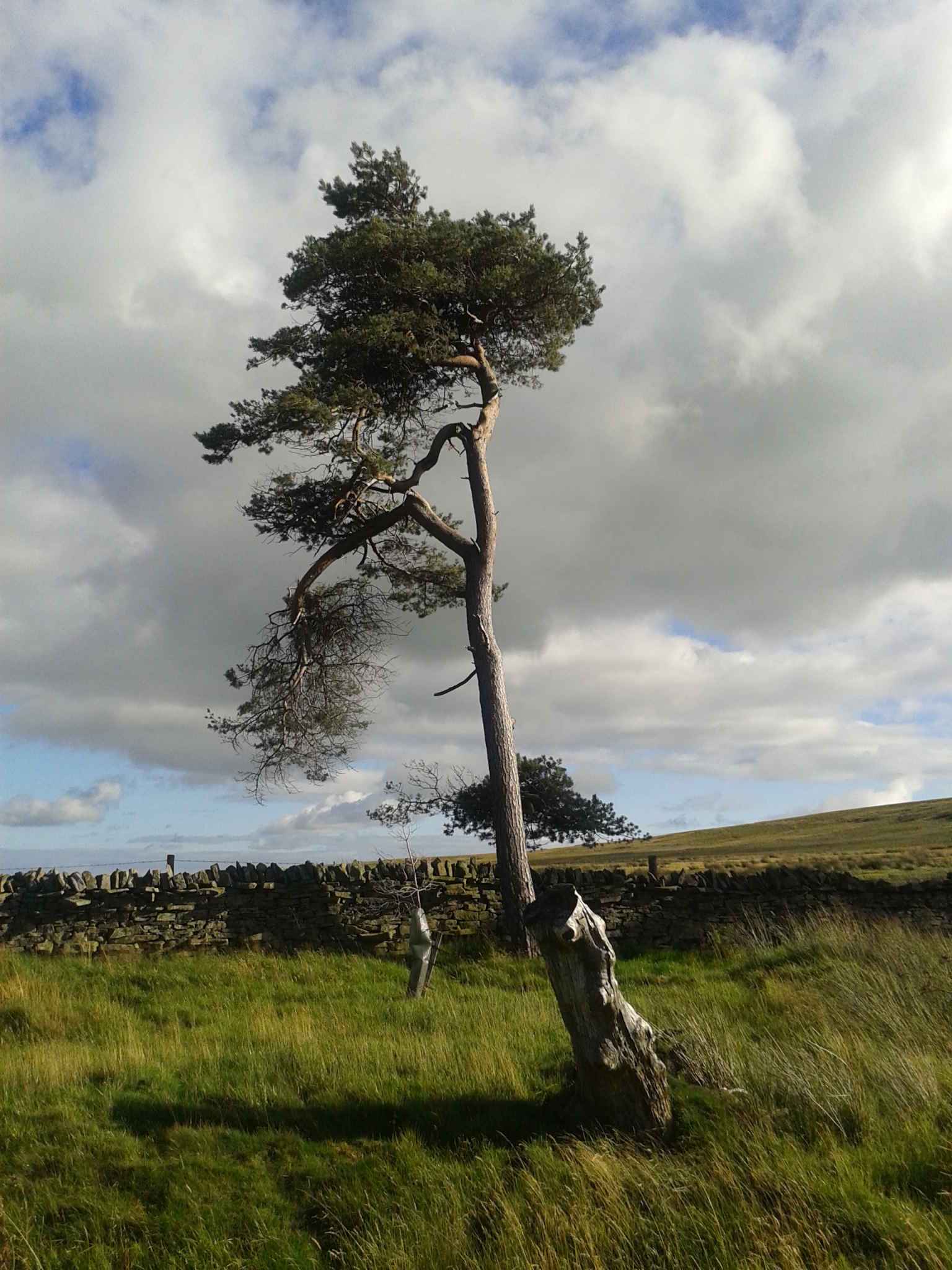
I have a growing collection of photographic images of trees and am increasingly fascinated by their form and location, using them to explore photographic techniques.  The idea of the tree as mother is a powerful one, linking to feminism, the matrixial and human connection to place, landscape and living systems.  The Elder-Tree Mother, a story by Hans Christian Anderson tells of the cycles of life and nature, and the role of the elder tree as a female entity- their guardian. The below is a picture of the Scots Pine that grows in our front garden, the spreading branches and dense canopy of which seem protective and benign.

20151009_114638

Scots pine tree mother

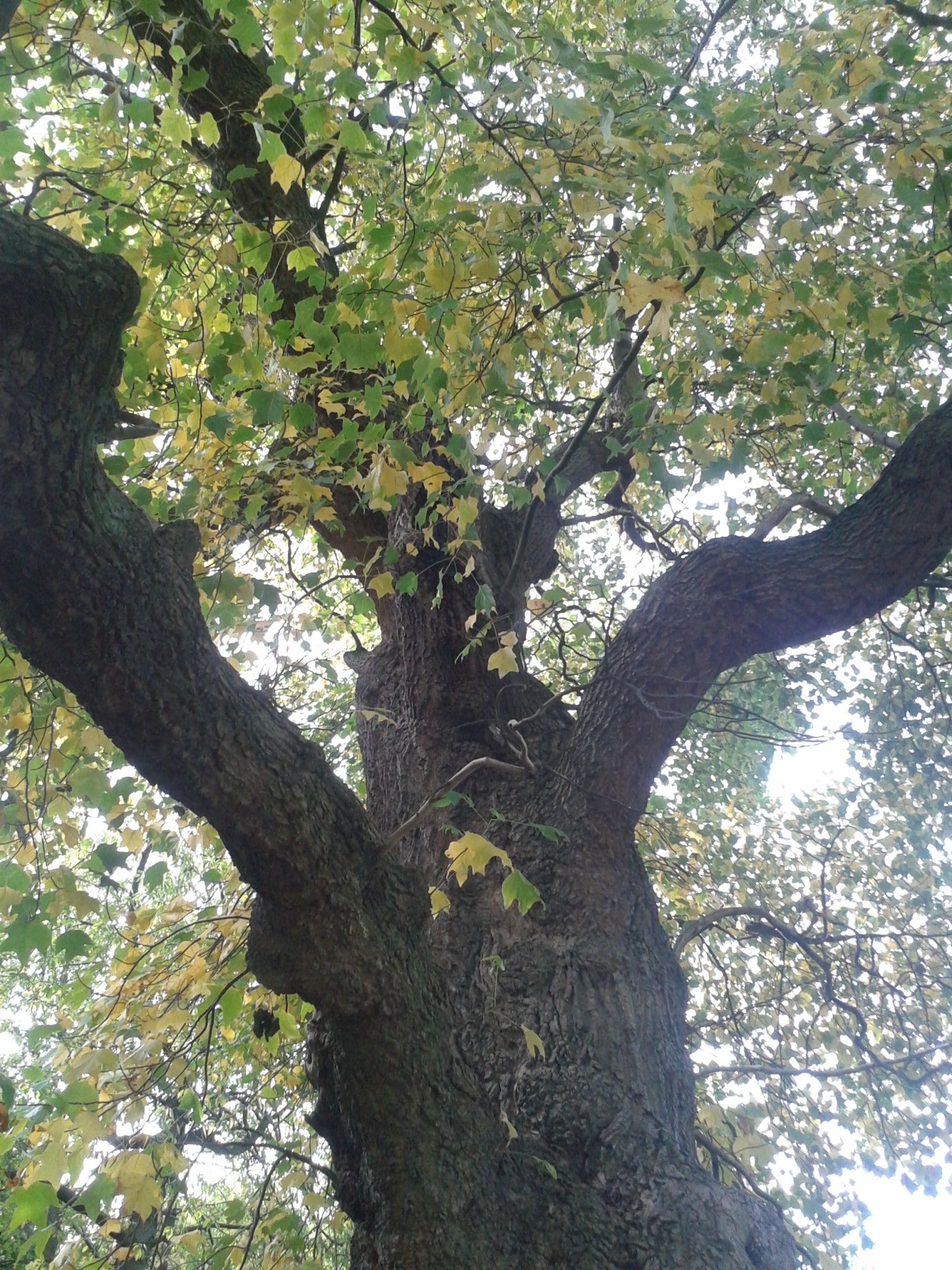
I am looking at how I can contribute to the development of an historic exhibition and linked educational resources which tell the story of Potternewton Park Mansion, built in 1817 for James Brown a wool merchant.  The building has been bought and sold many times, and put to many uses.  Currently it is owned by a Sikh group for community use and worship.  They have Heritage Lottery funding and LCA has been invited to support the production of an exhibition and educational resources, telling the story of the building and parkland in which it sits. I have been working on ideas, together with 2 other MA students.  So far I have visited the building and the Park (close to which I lived for 11 years), attended meetings to get to know some of the key players, taken photographs, including those below of one of the interesting collection of non-native trees in the Park, Liriodendron tulipifera, the Tulip Tree.  I also identified a beautiful, large Gingko, and have picked up and pressed leaves from these two trees for future use.

20151013_124531

   Tulip tree mother

20151013_124206

Tulip tree leaves turning

I am considering taking a series of photographs of the Tulip Tree through the seasons, at monthly intervals, from the same vantage point, for use in the final year show or the Potternewton Mansion project.  Have also taken a series of three photographs of vertical sections of the tree for possible use as the large-scale cyanotype image/s I aim to make for the corridor show in January.

The Other Art Fair

I have an ongoing friendship with local artist Carla Moss http://carlamoss.co.uk and recently travelled with her to the Other Art Fair in London, where she was exhibiting.  The journey provided a valuable opportunity for a long conversation, including about art.  I picked up the following tips:  Modern Art Gallery in Edinburgh for its collection of artists books by Alec Finlay;  gallery spaces in and around Leeds- Terry’s Shed (Andrew Lister from East Street Arts currently has show here), & Model, Set the Controls, and Flowers East in London;   material on the Onbeing websiteby Gordon Hempton http://www.onbeing.org/program/last-quiet-places/4557 and John O’Donohue http://www.onbeing.org/program/john-o-donohue-the-inner-landscape-beauty/203/audio.  The Other Art Fair was also very stimulating.  Here are some images.

20151015_162308     20151015_171844

Carla’s stall                                                      Use of maps and multiples

20151015_180047                               20151015_185052

Lovely Khadi paper, good presentation            Want to do more dry-point etching                                                                                        and find out about risographs

20151015_173425            20151015_181207

Tree shapes- from laser-cut stencils               Hand-written text and drawings, on                                                                                     paper from notebooks, presented as                                                                                     multiples

20151015_183147                             20151015_184601

Newsprint and paint                                       Polaroids, embellished and presented as                                                                              multiples

20151015_183323            20151015_183916

Photo buried for 3 months, dug up              Painted and actual leaves, plus text and                                                                                other symbols, exquisite

There were over 100 artists exhibiting and I spent 2-3 hours visiting and discussing their work.  it was useful to reflect on what interested me and drew me in.  Some themes were:  presentations that helped to carry meaning- multiples, collage, multi-media;  evocative materials- maps, newsprint, notebooks;  monochromatic or subdued, organic colours;  nature- the sea, leaves, trees, birds, landscape;  interventions with materials- burying the photograph under soil;  work that is the opposite of grandiose, modest?  The show was very international- I talked to artists from Spain, Brazil and Pakistan, all now based in London.

In Breach of Trust

20151016_194653

20151016_194705                  20151016_194825

This was the name of my tutor, Garry Barker’s, solo show.  It included several large wall-mounted jacquard tapestries and other textile pieces, pottery, drawings/paintings and packs of cards.  A core theme was the impact of global capital on ordinary lives, skilled workers superseded by machines, refugees and asylum seekers displaced by war and climate change, and our vulnerability in the face of unaccountable power.  It was good to see how the work, which had a strong sense of the personal, and the humane, occupied the space, which is part of Garry’s home, so fully.  Good for me to observe it as an example of contemporary curatorial practice.

Seconds out: Year 2

20150925_154347

20150925_154323

These photographs of trees were taken on a journey I made, by car, last week from home to my daughter’s house in Newcastle.  I was doing some practical research to prepare for the walk I intend to take from hers to mine, via my mother’s, in May 2016.  This will be the core concept for my second year on the MA.  I will be gathering, recording, encountering and experiencing many things along this route, and will work on the material so as to curate them into my final piece (‘Museum’) for the MA show this time next year.  The other major element will be to plan and structure the process, looking at relevant contemporary art practice, and researching pertinent aspects of the places through which I will travel (geography, geology, biology, ecology, sociology, technology, history…..).

This preparation will structure the material I will hand in for the next two modules of the MA- a research journal, and 6-8,000 word dissertation.  I intend to submit a series of weekly blog entries for the research element, of which this is the first.

This idea- of recording a journey and responding experientially to place, seeking meaning which resonates emotionally, politically and aesthetically- is a developing thread in my practice. It is interesting that this has become apparent to me only in retrospect.  I have sometimes thought of my approach to research and practice development as a directionless wander through dense forest.  My interests and concerns have seemed too disparate and unconnected to attain coherence.  Now, however, some key, enduring elements are becoming apparent, between which connections are starting to form more clearly.

These are:

  • Place and space
  • Engaging with people
  • Feminist and environmental politics
  • Walking and art practice
  • The indexical
  • Maps as art
  • Methodological and presentational concerns- image creation and transfer, alternative photographic processes, drawing, bookbinding, installation, curation

In terms of my research, it is often by ‘happenstance’.  Being at college on the MA course, with access to lectures, the library, resources, workshops and great staff, presents me with lots of opportunities for learning and exploration.  Peer learning and crits are a very useful part of the course. I am also well-networked through East Street Arts, Leeds Visual Arts Forum and Leeds Creative Timebank.  So there is an astounding array of information and activities with which to engage.  Again, it’s only in hindsight that a pattern is emerging.  Perhaps more than we credit of our research direction and individual learning journey happens subconsciously, instinctively, within the complex field of new ideas.

In that spirit, here are a few of the important learning experiences of the past year or so, which have got me here:

  • A series of talks by Bracha Ettinger in Leeds this summer
  • The Landscape and Arts Network day symposium, last summer in Hebden Bridge. Have since become a member
  • Getting involved in creative networks in Leeds. Making connections and having conversations (including with my peers on the MA) are important for my personal development
  • Karen Tobias-Green’s lectures on Research were very helpful in broadening the parameters of research in an arts context
  • Bianca Elsenbaum’s reading group introduced me to some key new ideas, and provided space for discussion
  • Several exhibitions: Ai Wei Wei, Anselm Keifer, Louise Bourgeois, Nathalie Holbrook, Cornelia Parker, Garry Barker, Human Nature at Munro House
  • Print and book fairs
  • The trip to Warsaw
  • Holidays, walks and visits- for taking photographs, drawing, thinking about the landscape,

Subsequent blogs will look at these elements in more detail, drawing out the relevance to my practice and the Walk Project.

Here we are again. Hand-in

IMG_0521

IMG_0577

IMG_0580

I’m putting the finishing touches to my portfolio for handing in for the next module of the MA.  The above images are of a finished piece- cyanotype contact prints of plant material on linen fabric removed from the back of a map of Yorkshire, reinserted to the covers of the old map.  The plants were gathered from St John’s churchyard and the piece is for the Love Arts Festival in October.

I want to use this blog entry to reflect on this practice-based module and attempt to draw the work together, to summarise and contextualise, and to link theory with practice.

Since last hand-in I’ve been doing lots of research in my customary, serendipitous way:

  1. ‘Field research’, which is an important part of my practice has included taking digital and film photographs, gathering ‘stuff’- plants, stones etc, and making graphite rubbings in various places, around Scotland and Northern England, and now including Leeds.  I’m involved in two site-responsive projects, at St John’s Church and Potternewton Mansion, so have been Googling and acquiring historical and contemporary maps.
  2. Practice-based research has included all the material I have written up for hand-in, exploring a range of methods and substrates to create images and recordings of place, indexical or at some ‘remove’.  Seeking the genius loci, trying to excavate stories, looking to find ways of presenting these elusive aspects of place in poetic or material ways to intrigue the viewer.
  3. Contextual or theoretical research has included:  exhibition and talk in Scotland by Natalie Holbrook http://www.nathalieholbrook.com/ who says on her website that: “No entity on this Earth is without a home or story. One must simply look, and listen. Notice the encounter and the stories that are woven with the threads and bark of Life.”

Human Nature exhibition at Monro House http://www.humannatureshow.com/ , which “champions artist who explore our connection to the natural world, enabling us to examine and celebrate our human need for a thriving environment.

Two days of talks by Bracha Ettinger (described in blog post of Jul 14th).

Reading more books by W.G. Sebald, Austerlitz, The Emigrants, Across the Land and the Water, and Ariadne’s Thread, a memoir of Sebald written by Philippa Comber.

An exhibition of dry-point etchings by Louise Bourgeois.

Trip to the Manchester International Festival, highpoints of which were a collaboration between Gerhard Richter and Arvo Part, and a brilliant show of contemporary Chinese art, both at the Whitworth.

Space and Place– a site-specific exhibition at Left Bank Leeds

Michael McMillan- one of the visiting speakers on the MA made a big impression in terms of his social practice, and the exercise he did with us when everyone talked for a set period of time about an object- the idea that things hold stories and can be an effective vehicle for opening up conversation and personal narrative.

Staff at the college continue to be inspirational.  Karen’s Communities of Practice day was really interesting (Catriona McAra was brilliant) and I enjoyed my Tutor, Garry Barker’s, show and artist’s talk.  Bianca Elzenbaumer’s Situated Practice reading group introduced me to Generation M https://hbr.org/2009/07/today-in-capitalism-20-1 with its echoes of new thinking about ‘Post-Capitalism’ eg by Paul Mason, see http://www.independent.co.uk/arts-entertainment/books/reviews/postcapitalism-a-guide-to-our-future-by-paul-mason-book-review-thoughtful-if-pessimistic-10443314.html

Drawn by Light exhibition on the history of photography at the National Media Museum- rather disappointing actually

I have been researching Hamish Henderson, one of Alec Finlay’s heroes, trying to read material by or about Bracha Ettinger and looking through books about alternative photographic methods, bookbinding (The Book as Art by Krystyna Wasserman published by the National Museum of Women in the Arts)

I guess this is looking a bit like the skeleton of my upcoming dissertation.

In terms of the implications for the practice module and where I’m heading I would emphasise:

  • Being more selective about how I choose to spend my time.  This means saying no to some things, and narrowing down the methods and media I include in my practice (as defined in my Next Steps document).
  • Prioritising the search for conceptual significance, in choice of material product and content, layers of meaning, and well-documented intentionality throughout the process.
  • Research into “cutting-edge contemporary curatorial practice”, in the words of my tutor.  I will start by asking Catriona McAra to point me in a good direction.
  • Introducing field-based conversation and sound-recording into my practice.

Out of the Shadows

Out of the Shadows is the name agreed for a show by several different artists at St John’s Church in Central Leeds.  The event will be in October this year, part of the Love Arts Festival and (we hope) opening on Light Night.  Two of my fellow MA students and myself are working together on a site-specific response to this fascinating place.

I have begun by spending time in the church, which is ‘unadopted’ and under the protection of The Churches Conservation Trust, which describes itself as the ‘national charity saving churches at risk’.  It is only open at limited times, entirely dependent on volunteers and showing significant signs of wear and tear to the amazing Jacobean interior.

20150707_150506

The surrounding public space is austere but well-kept, including a walkway paved with old gravestones, beautiful old trees and extensive lawns.  It is open in daylight hours as a thoroughfare between Merrion Street and Upper Briggate.  Apart from people using it as such, it maintains the proud tradition of Church grounds as a magnet for people on the edge of society, in this case young, mostly black and Asian, people openly dealing and using recreational drugs.

So far I have taken digital photographs of 64 versions of the word ‘sacred’ carved using a vast range of letter styles and decorative elements.  I have begun taking rubbings of a selected number of these using a graphite pencil and cartridge paper cut to size (approx. 84 x 30 cms), as below.  I aim to produce a large book of these by hand for display as part of the exhibition.

20150721_151528

20150723_144443

I have also taken digital and film photographs of shadows in the churchyard and will work further on these, using cyanotype and liquid light methods, onto a range of substrates, including fabric, paper and stone, which is a key element in my recent practice.

20150707_151730

Returning to my interest in maps, I found that Leeds Central Library is selling a collection of historical maps of Leeds (13 in all covering the very earliest maps from the 16th century, up to 1947), at a reasonable price (£12.99). From these I have photographed the sections of the maps including the church and will be working on image transfer of these to create more artworks for the show.

IMG_0479

The Ettinger gaze

20150617_141441

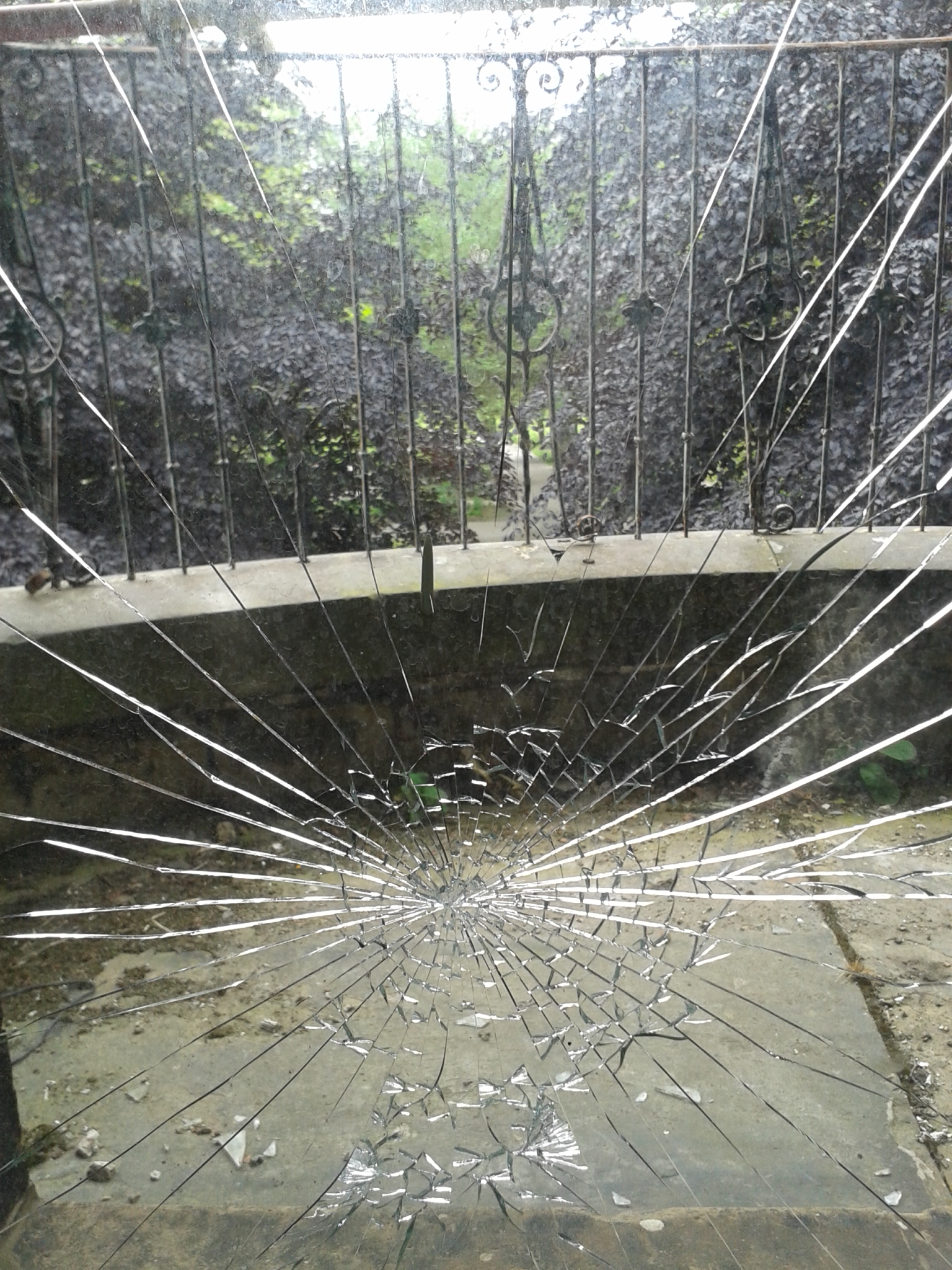
Broken window at Potternewton Mansion (of which more later)

There has been a big gap since the last post here.  Various reasons- mostly to do with domestic life and family matters.  So.. time to pick up the threads.

I have become very interested in the work of Bracha Ettinger (thanks to Carla Moss) and was lucky enough to attend a couple of excellent small-scale discussions with her recently at the Tetley. She is a striking person with challenging, intricate and extraordinary ideas.  I struggle to articulate my thoughts, or describe her ideas in any concise way without feeling that I am undermining their significance and complexity. But I’ll try.  Here are some of the themes which have stayed with me:

The centrality of vulnerability and trauma.  Ettinger was born in 1948, the child of Polish Jews who fled across Europe and finally escaped to Israel (Mandatory Palestine as it was then) in 1944.  The rest of her family died either in the Lodz Ghetto or in Auschwitz.  Her work, like many artists born in the immediate aftermath of WW2, attempts to come to terms with, and find meaning in, the Holocaust.  In terms of her visual art her paintings may take years to complete and comprise many thin layers of oil paint over images, photographs etc, collected over time, making complex, almost abstract and mysterious compositions, as below (the layers being the matrixial ga(u)ze).  She says that art should open us up to our shared experience of trauma (the archetype of which is our birth), in self-fragilisation- one of her many created terms.

Image result for bracha ettinger eurydice series

Image from Ettinger’s Eurydice series

She asks how we can have trust in the world after the Holocaust and looks to the Genesis story, reminding us of Eve’s choice, when she finds that one of her two sons is dead and the other a murderer, to give birth- to carry the future, as all babies do. She names the child Seth, meaning, in Hebrew, to carry, bear.

“The World has gone. I must carry you”  Paul Celan, Jewish poet whose parents died in the Holocaust and who committed suicide in 1970.  These words remind me of the collective experience of Allied prisoners of war working on the Burma railway during WW2 (as depicted in The Narrow Road to the Deep North by Martin Flanagan, which I read recently)

The Matrixial

In their creative processes, both these artists refer to the ‘matrixial’ as a model for confluence, reconnection and reception of the common. The ‘matrix’ or ‘matrixial’ is a concept developed by Bracha Ettinger from the connection between her psychoanalytic and artistic practices. In the meeting of patient and therapist, it goes beyond the traditional concepts of relation between the two figures, and creates a space for empathy, both conscious and unconscious, that contains that which is common to both and which belongs to the collective memory. In the process of artistic creation, it implies the activation of this space for empathy, generated by the encounter with the collective memory, and the establishing of new meanings and connections. This ‘matrixial’ approach makes it possible to perceive and to theorise – from a feminist perspective – the ethical links that connect the artist and his/her work to the audience.

Quote from http://www.fundaciotapies.org/site/spip.php?rubrique953 exhibition catalogue for Alma Matrix. Bracha L. Ettinger and Ria Verhaeghe

Re-purposing language. 

Ettinger dissects and reconnects language with the intention of revealing and modifying meanings- mining words for new interpretations, especially those more in tune with the ‘matrixial’ world view.  I have been looking at the world recently using the Ettinger/matrixial gaze.  This has meant seeing more interconnectedness, more human kindness, more opportunities for change and respect for each other and our environment.  Here are some of her re-wordings (often playing around with English, French and Hebrew words with linked, layered or complex and poetic meanings):

m/other

communi/caring

ma/mento

carriance (active version of hybridised caring/carrying)

borderlinking and borderspacing

re-co-naissance (rebirth, together), co(n)-ception, co(m)-passion

patterned becomes matterned, denoting, for example, the primal mode in which responsibility for the other resides.
This engagement with language, in a determined attempt to ‘speak’ the matrixial, is profoundly challenging to the perceived order, as well as playful.

Refusing to look away.  Ettinger advocates deeper acceptance and understanding of sorrow, vulnerability, trauma, since it is in these conditions we are most fully human, most able to experience our connectedness, and to feel empathy/sympathy.  Birth is an event of fundamental significance for Ettinger.  This trauma, for both infant and mother, brings us close to death, causes pain, and effects the loss of our profound connection with our mother in the womb, the coming into being of the ‘other’.  So- art which presents a path to these experiences is important.  We need to open ourselves up to art, to music, to beauty, through self-fragilisation to return to these founding aspects of human-ness.  There is strength in vulnerability- there is no freedom possible without connection/carrying/caring for the other.  Our strength is for carriance, not for paranoia or destructiveness.

Political implications.  Ettinger’s world view is fundamentally challenging to the current order of things.  She says, for example, that we women are people in exile from ourselves and our psychology, our meanings female identities foreclosed before they can exist.  We are in dire need of more meaningful metaphors and stories to explain us to ourselves- so that we can occupy the status of subjects.  She notices how mothers are chronically blamed and silenced rather seen as  important, indeed central to our survival, and proposes matrixial understanding as the key to balancing/overcoming other human psychodramas, such as narratives of dominance (Laius) or nihilism (Oedipus).

Last word to Ettinger herself:

The other and the earth need to be known through affective communicaring in self-fragilization. The knowledge revealed in this way, of the invisible chords to which our senses are not yet attuned, is at the basis of the ethical obligation to attend to the vulnerability of the other, human, animal, and even our shared earth, through care and compassion and in wonder and reverence. Lets work together against retraumatization and toward an understanding of a human subject which is informed by feminine transubjectivity in all genders, and become sensitive to the particular Eros of borderlinking between each I and non-I, which is a kind of love..